
How Well-Calibrated Is Your Threat Detection System?
Some amount of anxiety and worry is a normal part of being human.
In fact, it’s necessary.
Your brain’s built-in threat detection system exists to keep you safe — alerting you when something feels uncertain, uncomfortable, or dangerous. It’s flexible by design, learning to respond to new environments and situations.
But when that system becomes miscalibrated, it can start to signal “danger” even when you’re completely safe. That’s when anxiety stops being helpful and starts being exhausting.
Why Anxiety Exists — and Why It’s Not Always the Enemy
Anxiety is your mind’s way of saying, “Something might be wrong — pay attention.”
And when used properly, it’s incredibly useful.
It helps you focus during a presentation, avoid walking down a dark alley at night, or prepare thoroughly for an important meeting.
But because the threat detection system is so adaptable, it can also get confused.
New situations — a new job, a relationship change, moving house — can all trigger anxiety, even if there’s no real danger.
That’s because your mind is trying to protect you from uncertainty. It creates a story that says, “This is new, so it must be unsafe.”
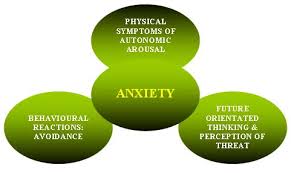
Over time, this can build a false sense of danger that keeps you in a cycle of fear and avoidance.
How the Brain Learns (and Unlearns) Fear
Your threat system works through experience, not words.
You can’t just tell yourself, “There’s nothing to worry about.”
Your brain doesn’t respond to logic — it responds to behaviour.
As you said so well: thoughts create feelings, and feelings drive behaviour.
So if you want your brain to believe that something isn’t dangerous, you have to show it.
That means gently approaching situations that feel uncomfortable but aren’t actually unsafe — like flying, public speaking, or being alone.
Each time you do, your nervous system updates its settings, learning:
“This feels uncomfortable… but I’m actually safe.”
That’s how you start to recalibrate your threat system — one brave, intentional step at a time.
When the Alarm System Goes Off Too Often
When your threat detection system is out of alignment, it sends false alarms.
You might find yourself:
-
Avoiding motorways or certain types of travel
-
Jumping at small noises or harmless creatures like spiders
-
Feeling unsafe in perfectly normal situations
In short, your brain has learned to overreact — and it’s convinced you to live smaller as a result.
This isn’t weakness or irrationality; it’s just a system that’s learned the wrong lesson. And the good news? It can absolutely learn a better one.
Retraining Your Mind to Feel Safe Again
Through approaches like Cognitive Hypnotherapy, which blends CBT, hypnosis, and other evidence-based techniques, you can help your brain distinguish between real and imagined threats.
You can teach it to respond to life with curiosity instead of fear.
And once your mind starts to feel safe again, your body follows.
That’s when calm, confidence, and choice return.
Ready to Reset Your Anxiety Response?
If you find yourself anxious in situations that don’t truly pose a threat — from flying to social interactions — your threat detection system may just need recalibrating.
At Rob Donnelly Therapy, based in Newbury and Thatcham, I help clients across Berkshire retrain their minds and bodies to respond differently to fear.
Get in touch here to book a free consultation and start learning how to feel safe, grounded, and in control again.
You may be surprised by how simple — and powerful — the change can be.